

Here find the wisdom and stories of the giants of the true faith, some well-known, some unknown to most. Some of these accounts of living without limit will be short, perhaps even snippets. Others will be more detailed so as to capture more of the weight and the glory of these elders of faith. Be encouraged and motivated in your own journey of surrender to a life without limit.
Evan Roberts
Evan Roberts was a central figure in the Welsh Revival of 1904 , one of the great Holy Spirit outpourings in the history of the church.
Roberts quit school to become a coal miner at the age of twelve. At thirteen he received Christ as his Savior. From his early days he was quite sensitive to spiritual things.
Shortly after his conversion he heard a sermon in which the preacher challenged the congregation to greater commitment. This affected young Roberts deeply. He determined he would not miss any of the many church meetings that were offered.
Despite his tiresome work in the coal mine, he began to attend every prayer meeting, youth meeting, or any other meeting offered by the church. This involved him being at church six out of the seven days of the week. This he did consistently throughout his teen years.
Robert’s fervor deepened as he entered his twenties. We pick up the story from “The Spark that lit the Welsh Revival,” By Jennifer Trafton
“Thursday, September 29, 1904. The stirrings of a spiritual awakening had already begun among the youth in several towns of South Wales when Evan Roberts, a 26-year-old former coal miner training for the Calvinistic Methodist ministry, attended a mission conference led by the evangelist Seth Joshua. For years, Roberts had been longing for the Holy Spirit to set his heart on fire. Joshua, meanwhile, had been praying that God would raise up a man from the coal mines or fields to bring revival to the churches. Both men found answers to their prayers that morning in Blaenannerch.
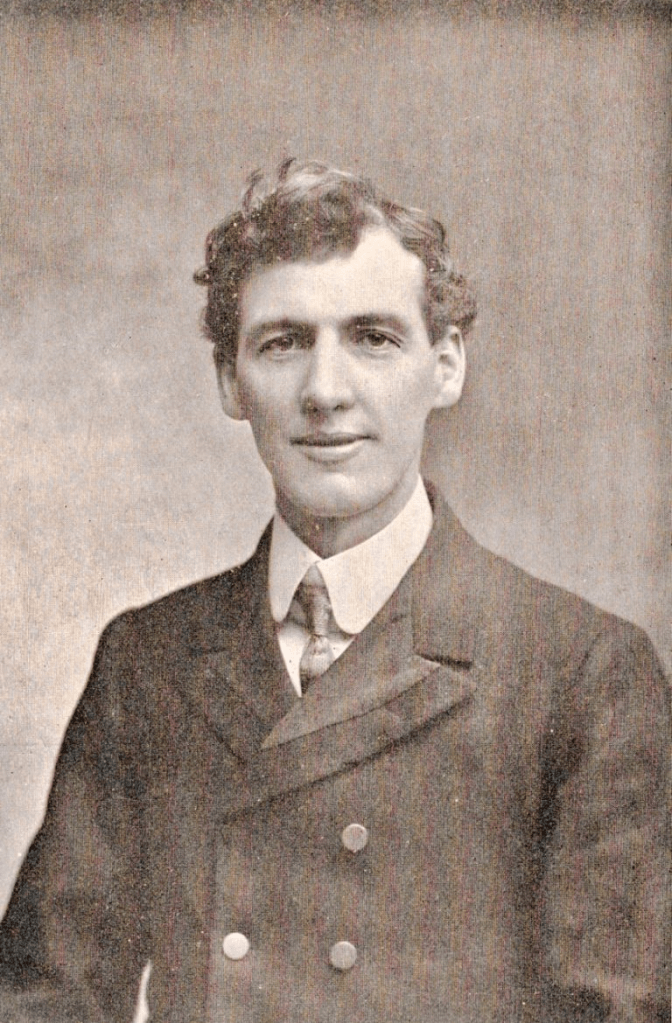
“In the months that followed this dramatic ‘baptism of the Holy Spirit,’ Evan Roberts carried his message throughout Wales with a youthful, unconventional zeal that vaulted him to celebrity status. He soon became the controversial hero of a rapidly spreading revival characterized by spontaneity rather than liturgical order, open prayer and confession rather than formal preaching, and obedience to the promptings of the Spirit rather than human direction.
The revival brought an estimated 100,000 new converts into the churches and sent shock waves throughout Britain and beyond—even as far as Los Angeles, where reports of the Welsh awakening contributed to the birth of Pentecostalism in 1906. Evan Roberts’ simple prayer, ‘Oh, Lord, bend me,’ blossomed into the theme of the revival: ‘Bend the Church and save the world.’”
From Spirit of Grace Ministries: “While Evan Roberts seemed to be God’s chosen instrument to spearhead the revival, he was by no means the whole of it. As word of what God was doing in Loughor spread, fervent prayer for awakening went forth all over Wales and those prayers were heard almost instantly. Within weeks the fires of revival were blazing all through the nation.
The effects were astonishing. Churches which had been only half full were now unable to hold all the people eagerly coming to find Christ. Services which had been formal and lasting an exact designated time, were now hotbeds of prayer, praise, and singing, starting sometimes at six in the evening and going on till past midnight.
One pastor, when asked about the times of his services, replied, “From six until midnight.” The astonished inquirer said, “You mean you have church from six p.m. until midnight?” “No,” said the pastor. “I meant from six a.m. until midnight.”
Helen Roseveare
Helen Roseveare was a medical missionary in the Belgian Congo in the 1950s and 60s. She has written a number of books about the lessons learned there, and about the revival that was happening in the 1950’s in the Congo.
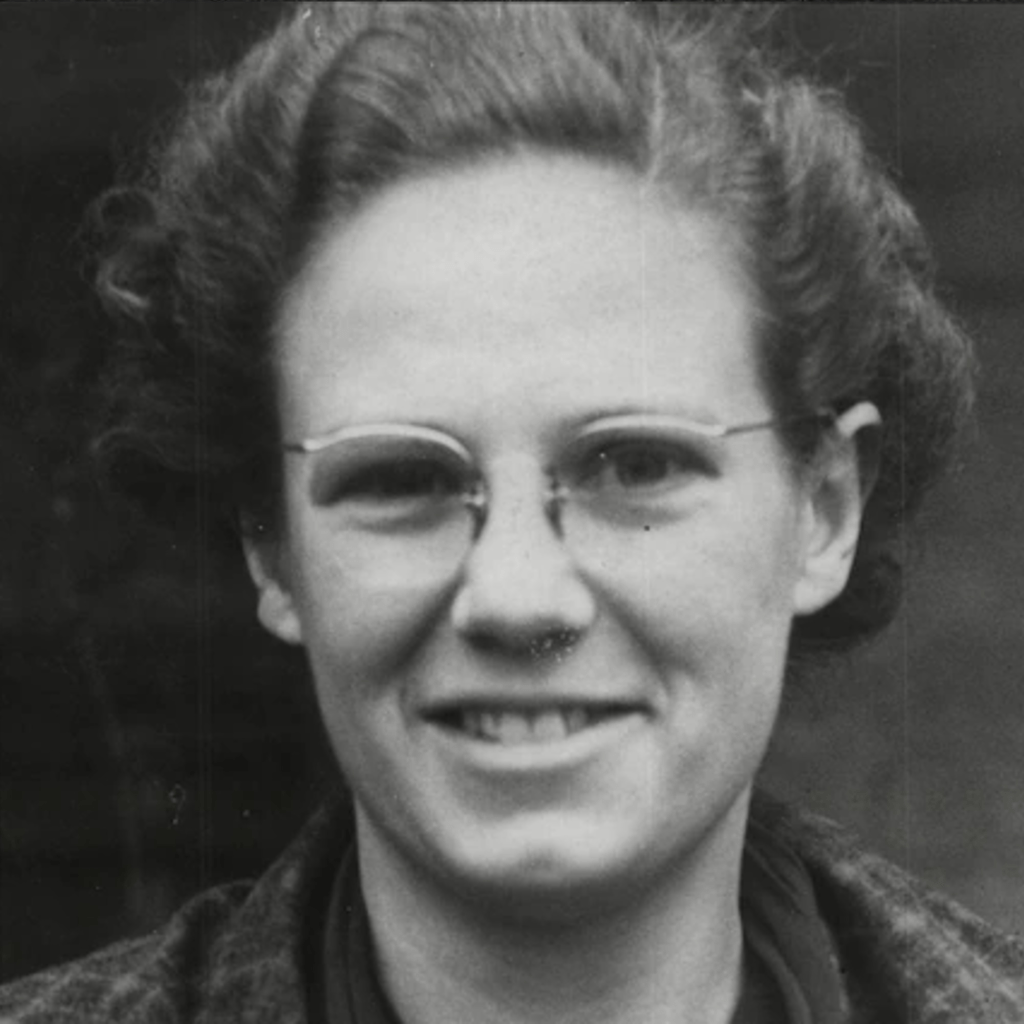
This story is about the child-like faith of an orphan child in Roseveare’s orphanage. Her name was Ruth. Here is how Roseveare tells it:
“One night I had worked hard to help a mother in the labor ward; but in spite of all we could do, she died leaving us with a tiny premature baby and a crying two-year-old daughter. We would have difficulty keeping the baby alive, as we had no incubator. We had no electricity to run an incubator. We also had no special feeding facilities.
Although we lived on the equator, nights were often chilly with treacherous drafts. One student midwife went for the box we had for such babies and the cotton wool the baby would be wrapped in. Another went to stoke up the fire and fill a hot water bottle. She came back shortly in distress to tell me that in filling the bottle, it had burst. Rubber perishes easily in tropical climates. “And it is our last hot water bottle!” the midwife exclaimed.
“All right,” I said, “Put the baby as near the fire as you safely can, and sleep between the baby and the door to keep it free from drafts. Your job is to keep the baby warm.”
The following noon, I went to have prayers with any of the orphanage children who chose to gather with me. I gave the youngsters various suggestions of things to pray about and told them about the tiny baby. I explained our problem about keeping the baby warm enough, mentioning the hot water bottle. The baby could so easily die if it got chills. I also told them of the two-year-old sister, crying because her mother had died. During the prayer time, one ten-year-old girl, Ruth, prayed with the usual blunt conciseness of our African children. “Please, God,” she prayed, “send us a water bottle. It’ll be no good tomorrow, God, as the baby will be dead, so please send it this afternoon.”
While I gasped inwardly at the audacity of the prayer, she added by way of a corollary, “And while You are about it, would You please send a dolly for the little girl, so she’ll know You really love her?”
As often with children’s prayers, I was put on the spot. Could I honestly say, “Amen?” I just did not believe that God could do this. Oh, yes, I know that He can do everything. The Bible says so. But there are limits, aren’t there? The only way God could answer this particular prayer would be by sending me a parcel from the homeland. I had been in Africa for almost four years at that time, and I had never, ever received a parcel from home. Anyway, if anyone did send me a parcel, who would put in a hot water bottle? I lived on the equator, where the weather is hot.
Halfway through the afternoon, while I was teaching in the nurses’ training school, a message was sent that there was a car at my front door. By the time I reached home, the car had gone, but there, on the veranda, was a large twenty-two-pound parcel. I felt tears pricking my eyes. I could not open the parcel alone, so I sent for the orphanage children. Together we pulled off the string, carefully undoing each knot. We folded the paper, taking care not to tear it unduly. The excitement was mounting. Some 30 or 40 pairs of eyes were focused on the large cardboard box. From the top, I lifted out brightly colored, knitted jerseys. Eyes sparkled as I gave them out.
Then there were the knitted bandages for the leprosy patients, and the children looked a little bored. Then came a box of mixed raisins and sultanas – that would make a nice batch of buns for the weekend. Then, as I put my hand in again, I felt the…..could it really be? I grasped it and pulled it out–yes, a brand-new, rubber hot water bottle!
I cried. I had not asked God to send it; I had not truly believed that He could. Ruth was in the front row of the children. She rushed forward, crying out, “If God has sent the bottle, He must have sent the dolly too!”
Rummaging down to the bottom of the box, she pulled out the small, beautifully dressed dolly. Her eyes shone! She had never doubted. Looking up at me, she asked: “Can I go over with you, Mummy, and give this dolly to that little girl, so she’ll know that Jesus really loves her?”
That parcel had been on the way for five whole months! Packed up by my former Sunday school class, whose leader had heard and obeyed God’s prompting to send a hot water bottle, even to the equator. And one of the girls had put in a dolly for an African child – five months before – and both delivered that day in answer to the believing prayer of a ten-year-old to bring it that afternoon.”
Little Ruth, in her childlike faith, puts most of us to shame. Her trust in her God was not only absolute, it was her normal way of living. She believed God would act in response to her praying, so her praying was audacious. Her life was audacious. Fully yielded and fully dependent. That prayer was not an anomaly. It was a window into her absolute, childlike trust. This is the trust Jesus identifies as a non-negotiable for life in His kingdom.
Gerhard Tersteegen
Gerhard Tersteegen was born at Moers, Germany , November 25, 1697. After his father’s death when Gerhard was only six, his mother was unable to send him to the university. He studied at the Gymnasium in Moers and then earned a meager living as an apprentice, and later as a silk and linen weaver.
Tersteegen lived his younger years in difficult times. His father’s death made things quite difficult for his single-parent mother and his six siblings. Add to this the lingering destruction of both property and prosperity residual from the Thirty-years War, which by some estimates killed 80% of the peasant population in the protestant quarters of Northern Europe.
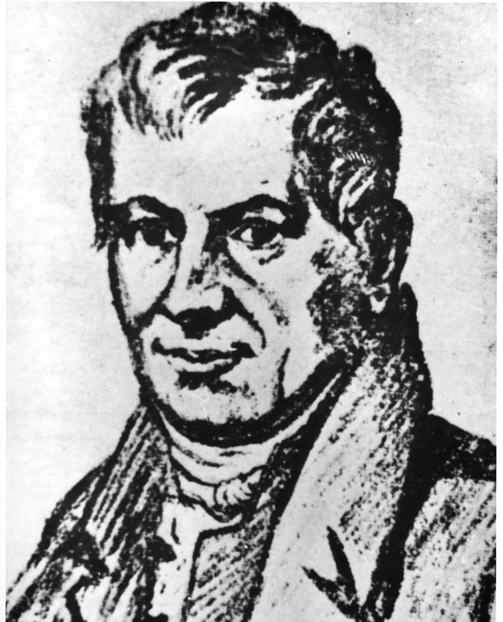
The Thirty-Years War had been over for some time, but there was much religious turmoil still roiling the landscape. The persecutions by the Catholic and Lutheran Churches against each other and against the non-conforming seekers of a true experience of Christ in them were still present. Apparently, Tersteegen was not unmoved by these conditions.
Teresteegen was apprenticed to a merchantman who was also his sister’s husband. Early in his apprenticeship he formed the acquaintance of a godly merchant, from whom he received much spiritual counsel. It was at this time that he had been deeply affected by reading the thanksgiving prayer of a dying pastor. This, ombined with the teachings of the non-conforming true Christ-followers, was successful in undermining his self-satisfaction and in awakening deep craving for an inward spiritual change.
Any spare moments of leisure from Tersteegen’s apprenticeship duties he would give to prayer and scripture, and he might often be seen at the meetings of the non-conformists. He came to realize a true peace with God through our Lord Jesus Christ. The occasion of it was during a sharp attack of illness which seized him one day while walking in Duisburg forest. From this point, Tersteegen became increasingly devoted to his inward journey into Christ.
He settled down to a life of the plain living and solitude. His food, most often milk and water and meal generally its only ingredients, was cooked and partaken of but seldom. Though his hours of labor were long, his earnings were apparently meager. This led to him being at times in dire straits, not knowing from where the next day’s food was to come.
The privation undermined Tersteegen’s health, and he suffered a serious depression for some five years. At this time, he was deprived of the sense of God’s favor and dwelt in a state of darkness, and his faith often teetered on the brink of unbelief.
Yet Tersteegen endured, and in time his faith strengthened. He came to trust fully in the atonement and mercy of our God. This led to Tersteegen writing a document that was his new covenant with God, signing it in his own blood.
Soon, all doubts and troubles vanished and from that time forward he had peace and joy no matter the circumstances. Tersteegen soon became known as one who had a keen ability of realizing the unseen, which combined with the experience he had lately gone through, gave him a divine capacity for touching and strengthening other hearts.
A strong proponent of the deeper, inward life of God in His true children, he did not attend the services of the Reformed Church after 1719. Although forming no sect of his own, he became well known as a religious teacher and leader. His house was known as “The Pilgrim’s Cottage” — a retreat for men seeking a faithful, simple way of life, while he himself was known as “the physician of the poor and forsaken.”
At the same time, Tersteegen showed himself extremely liberal to the poor. Often at night, when he might not be recognized, he would leave home and head to the homes of the sick and the needy, and minister to them all that could be spared from his few stores.
Tersteegen soon became known as a religious teacher among the “Stillen im Lande,” in English, the quiet ones. This was a name given to those seeking God beyond organized religion. In 1728 he gave up his handicraft in order to devote himself to the translation of works by medieval and recent mystics and quietists. He also wrote devotional books and correspondence on religious subjects and was a kind of spiritual director for other seekers. From 1728 to his death he was supported by a small regular income given by his admirers and friends.
Tersteegen summed up the true Christian faith with these words:
“The assurance of the forgiveness of sins is commonly taken for believing in Jesus; but in my opinion this is incorrect. That which I have more fitly called the drawing of the Father, I might also with propriety call believing in Jesus; for the Father draws us to the Son. But faith in Christ has its gradations. In the beginning it is a coming to Jesus (John 6:35); that is, with hunger and desire. It is afterwards a receiving of Jesus (John 1:12), which cannot take place unless the sincere will of the soul lets go at once the world, sin, and self. In advancing, faith is an abiding in Jesus (John 15), namely, with a fervent inclination, otherwise called retiring within or cleaving to Him (1 Cor. 6:17); and thus, by abiding and walking in Jesus, we are increasingly rooted and grounded in Him (Col 2:7), which, however, is not accomplished without affliction and trials. Faith is, finally, a dwelling of Christ in the soul, and of the soul in Christ (Eph. 3:17; John 17:23), and a becoming one with Him.”
William Borden
D.L. Moody famously stated, “When I was a young man I heard Henry Barley say that the world has yet to see what God can do for a man fully yielded to Him, and I said I wanted to be that man. But I can say today the world has yet to see what God can do with a man fully yielded to Him.” It may well be that William Whiting Borden, a young missionary whose life was cut short as he prepared to go minister among the Chinese Muslims , was that “man fully yielded to Him.”
Born in 1887, William Borden entered the world amidst wealth and affluence. His family was quite wealthy, and William attended prestigious private schools in Chicago. Yet this affluent life did not deter the family or William from seeking after the life of God. They attended the Chicago Avenue Church, where Dr. R. A. Torrey was pastor. Under Torrey’s ministry and under the Godly influence of his own mother, William had trusted Christ as Savior and sought daily to follow Him as Lord.
When he graduated from high school his parents gave him a present of a trip around the world, hiring a devout Christian young man to travel with him as his companion and guardian. While on this trip William met a number of Christian missionaries who made a deep impression upon him. He wrote his mother, “When I look ahead a few years, it seems as though the only thing to do is prepare for the foreign field…”
William quickly became a prominent student at Yale as he excelled in the classroom, on the football field, and in friendship. He invested in ministry and service to his college and to the town of New Haven. During William’s freshman year his father died. He, along with his brother, were given access to the family fortune, something William determined to use for the Kingdom of God. Sometimes he would quietly write out a check for a large amount and entirely fund various ministry organizations with which he was involved. But at other times he would spend hours praying with friends for needed funds, feeling like it wouldn’t be honoring to God for him to simply support all Christ’s work apart from prayer and faith.
Also, during his freshmen year William was approached about starting a city mission as a ministry to the downtrodden, and that would provide fellow classmates with a ministry outside of Yale. He was more than eager to be of assistance in this mission, both providing the finances (equivalent to half a million dollars in today’s currency) and administrative leadership. Yale Hope Mission, as it came to be known, annually served over seventeen thousand meals and provided over eight thousand nightly beds, with gospel messages preached daily to all.
William also began meeting with friends for morning prayer and Bible study. At the same time, William eagerly sought ways to motivate other students to join Bible study groups. By the end of his first year 150 were meeting together in groups. By his fourth year at the university there were 1,000 of the 1,300 Yale students attending these Bible studies.
After Yale, he attended Princeton Seminary. While in seminary, Borden was not so preoccupied with his studies that he ceased to be of service. He served as a director for the National Bible Institute in New York City, which focused on equipping men and women with Biblical training and practical ministry skills. Borden also served as a trustee of Moody Bible Institute.
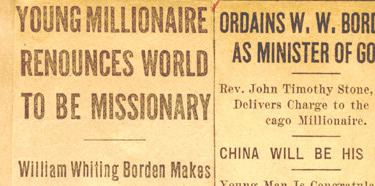
The foreign mission field was William’s aim, and to that end he was ordained into the gospel ministry at Moody Church in 1912. Before leaving, Borden spent that fall traveling to numerous colleges to speak to students about foreign missions. His zeal and dedication for the work of the Lord, along with being called by many the “millionaire missionary,” drew many to his meetings. He urged students to prayerfully consider what part they might play in expanding the kingdom of Christ. His tour of thirty-four schools across multiple states in seventy-six days was an amazing and inspirational feat.
On December 17, 1912, William Borden said goodbye to friends and family and boarded a ship at New York Harbor. His travels took him to Cairo, where he was to spend a year in Arabic and Islamic studies. He rented a modest room from a Syrian family to be better immersed within the culture.
William had not been in Cairo two weeks before he organized students of the theological seminary to begin a house-to-house canvass with Christian literature for the whole city of eight hundred thousand people. After just three months of study and evangelism, something happened to William that shocked the world. The passionate young missionary contracted spinal meningitis. Within a month William Borden was dead.
The news of the young millionaire’s death was flashed by cable around the world. William’s death became international headlines. Memorial services were held in Princeton, at Yale, and at Moody Church in Chicago. Later, it was learned that memorial services were also held in Europe, China, Japan, Egypt and Africa, all places William had influenced in his short life. His passion for Jesus and missions, and willingness to risk everything inspired countless believers to volunteer for missionary service and to dedicate themselves wholeheartedly to the cause of Christ.
He was buried in Cairo as countless tributes poured in from around the world. One such tribute stated the thoughts of many: “William Borden has lived two lives in one; for he has done more in twenty-five years than many men accomplish in fifty.” Another missionary wrote about Borden: “I have absolutely no feeling of a life cut short. A life abandoned to Christ cannot be cut short. ‘Cut short’ means not complete, interrupted, and we know that our Master does no half-way jobs…”
In his Bible were found three powerful messages to himself, written at different times in his life. While he was in school, having made his decision to forsake a comfortable life of wealth and ease in the U. S., he had written, “With no reserve and no delay, with all my heart I come.” After graduating from Yale, with many offers of important positions coming to him, he wrote, “No retreat.” And below these two phrases, written shortly before he died, were the words, “No regrets.” Indeed, William Borden lived a life of no reserve, no delay, no retreat, and no regrets.
The concluding stanza of Isaac Watts’ “When I Survey the Wondrous Cross,” sung as the final hymn during Borden’s ordination, aptly summarizes this young man’s life and heart, who forsook the riches of this world for the riches of Christ:
Were the whole realm of nature mine,
That were a present far too small;
Love so amazing, so divine,
Demands my soul, my life, my all.
Content compiled from Institute in Basic Life Principles, Ligonier Ministries, and Spirit of Grace Ministries websites, as well as from the book, “Borden of Yale ’09” by Helen Taylor.
 Without Limit